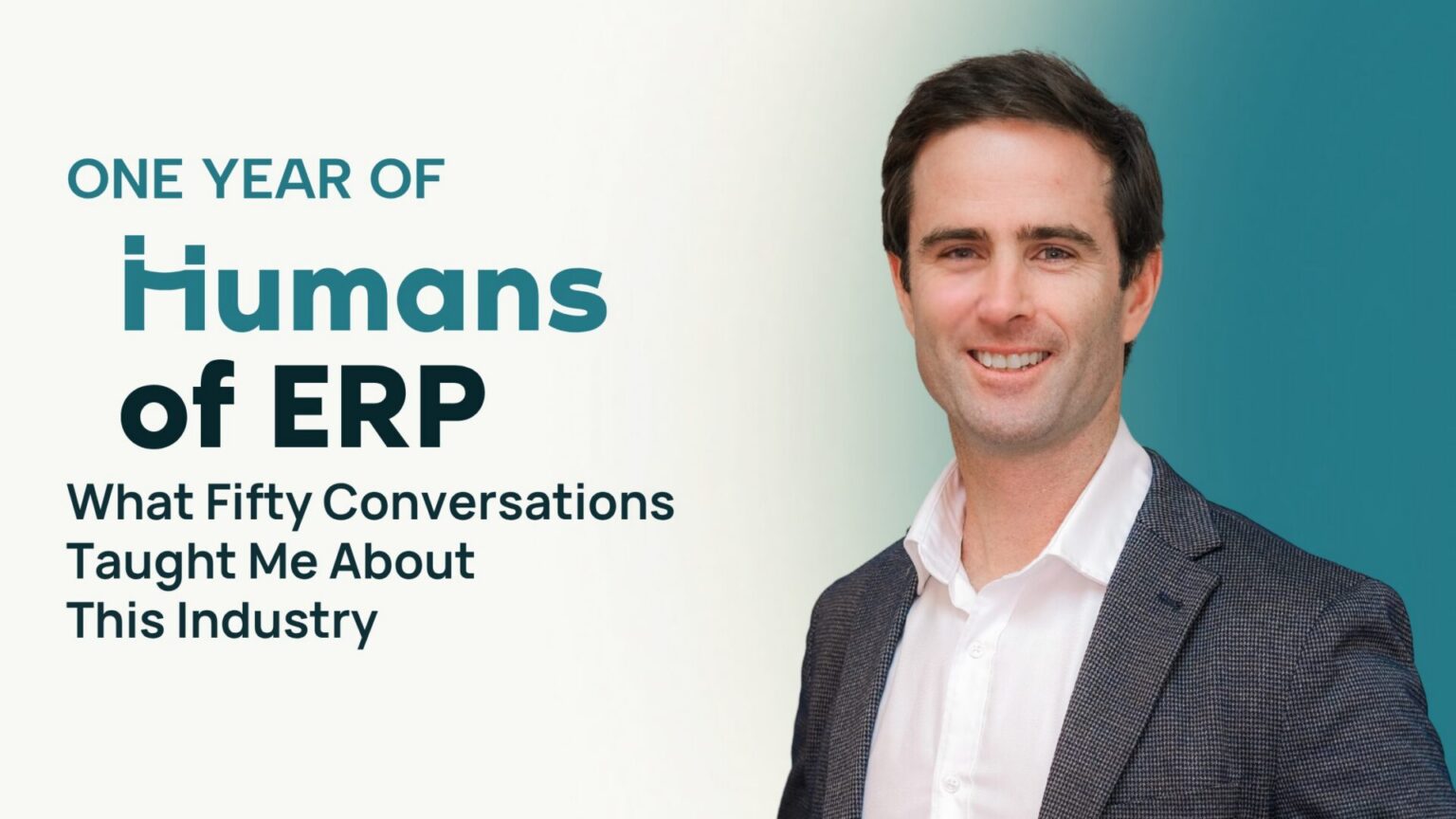
A year ago, we started something small.
Before you’re an expert, you’re a human. That idea became Humans of ERP: a simple experiment built around conversations with people working in enterprise technology. What began as a few interviews slowly became something much bigger than I expected. Not a media platform or a marketing campaign, but a community built around the stories we usually leave out of the industry conversation.
And if I’m honest, in the beginning, I wasn’t sure it would last.
There are already plenty of platforms in this space. Vendor blogs, conference panels, transformation success stories polished to perfection. Most are trying to sell something: a product, a framework, a version of certainty. Somewhere along the way, though, the human part gets edited out. The pressure. The doubt. The burnout. The relationships. The moments people carry long after the go-live celebrations are over.
So we tried something different. Not a vendor pitch. Not a case study. Just a conversation with the person who quietly held the project together.
Humans of ERP exists to spotlight the people shaping Australia’s ERP landscape: the consultants, architects, analysts, change leads, developers, support teams and delivery managers behind every implementation, recovery, transformation and late-night cutover. Not the version from the CV. The real version. And fifty conversations later, I think that distinction matters more than ever.
The Work Behind the Work
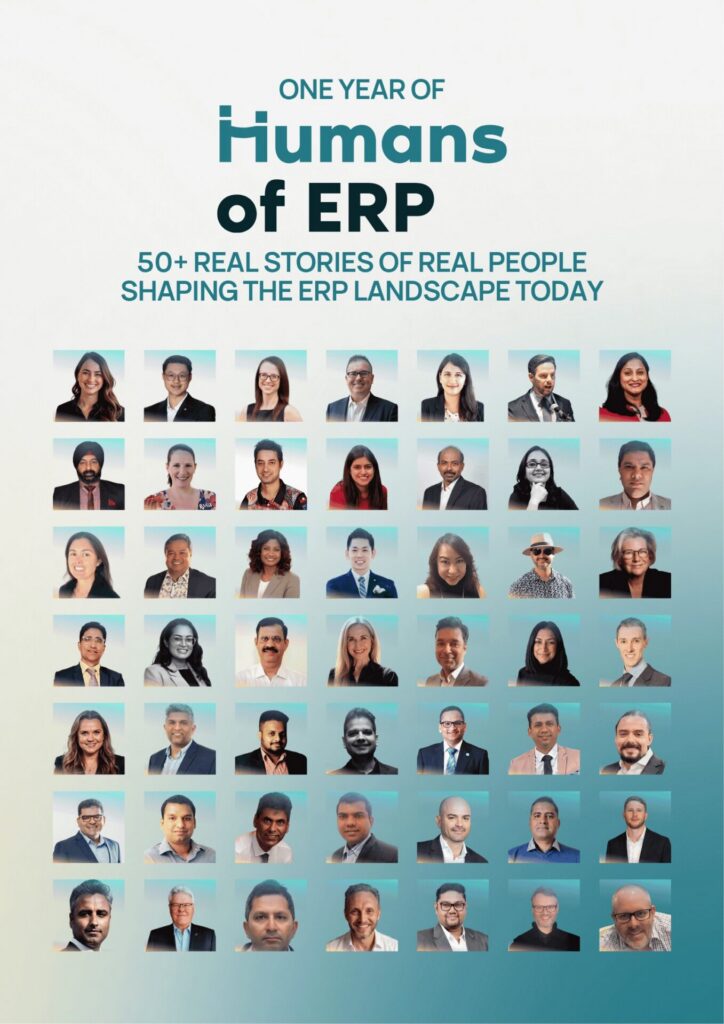
Across fifty interviews, one thing kept repeating itself: people wanted to talk about the things nobody had ever asked them about publicly before. The 2am cutover calls. The decisions made under impossible pressure. The mistakes they still think about years later. The colleague who carried an entire project quietly and never got mentioned in the wrap-up email.
Some conversations stayed with me long after the recording ended.
One guest spoke about finishing one of the hardest triathlons on earth at the start of December 2023, only to wake up in a Brazilian hospital bed on Boxing Day after suffering two strokes. “Strength isn’t endurance or achievement,” he said afterwards. “It’s awareness.”
A former surgical assistant spoke about spending eight years inside operating theatres, assisting with kidney transplants and tumour removals before eventually finding his way into ERP. What stayed with him across both careers was the same question: what is the actual problem we’re trying to solve here?
One consultant reflected on walking away from an eighteen-month engagement after a single day, spending nine months unemployed with less than $600 left to his name before eventually being called back for coffee by the executive who hired him. “How did you know so quickly?”
A high-performing delivery professional described burnout arriving disguised as productivity, ending in a late ADHD diagnosis that reframed an entire career built on structure and control. “How could I have missed this?”
An international student turned entrepreneur reflected on arriving in Melbourne full of ambition, watching a cryptocurrency venture collapse after a year of work, and eventually learning something simple but difficult: “The body requires maintenance.”
One senior leader shared the moment a mentee took her to lunch just to resign, and the quiet realisation that followed afterwards: “I thought I was helping. I probably didn’t listen enough.”
And one guest described a crossroads many people in this industry know intimately but rarely admit out loud — where everything looked right on paper, but nothing felt right underneath.
These aren’t edge cases. They are the texture of this industry — the part LinkedIn posts don’t quite capture.
The Gap Between Strategy and Reality
Most public conversations in enterprise technology happen at a strange altitude. We talk about transformation, strategy, roadmaps, capability uplift and digital futures, and often the bigger the language becomes, the further away it drifts from the actual work.
The conversations we had this year were the opposite: specific, grounded, sometimes uncomfortable, but always human. And I’ve come to believe that gap — between how this industry presents itself and how the work is actually experienced — is one of the biggest problems we have. Not because people are dishonest, but because polished language can slowly remove accountability from the room. The human cost disappears first. Then the lessons do too.
Seven Webinars Later, the Questions Changed
We also hosted seven webinars throughout the year across different topics, formats and rooms. At the start, the conversations sounded exactly how you’d expect. People asked about trends, frameworks, playbooks and best practice.
But something shifted around webinar four or five. The questions became sharper. People stopped asking what the trend was and started asking who owns it when it fails. They stopped asking for the playbook and started asking what happens when the playbook is wrong. The room became more honest, and once that happens, the conversation changes permanently.
That was probably the biggest surprise of Year One. A small community returning to the same conversation consistently creates more depth than any keynote ever can.
Our seventh and final webinar — our anniversary session in July — was the first one I hosted myself. For the first time, I sat on the other side of the platform we’d built. It felt unfamiliar, but it also reminded me exactly why we started this in the first place.
Taking the Community Offline
Before we close out Year One, we’re taking Humans of ERP off the screen and into the room.
Over the coming months, we’ll host a series of in-person meetups across Brisbane, Sydney, and Melbourne — bringing the Humans of ERP community together face-to-face for the first time. Smaller rooms. Better conversations. A chance to connect with the people behind the projects, stories and discussions that shaped Year One. Venues and dates are currently being finalised, with more details coming soon.
Later this year, we’ll also announce the first Humans of ERP Awards Night — recognising the people, projects and lessons that shaped the year, especially the work that usually goes unnoticed. That part feels important, because recognition in this industry often flows upward while the real weight of delivery is carried somewhere else.
To Everyone Who Was Part of Year One
If you’ve been part of Humans of ERP in any way this year — featured, interviewed, attended a webinar, shared a post, sent a message, recommended someone, or simply followed quietly from the sidelines — thank you.
This community only exists because people kept showing up for a different kind of conversation. And in an industry as noisy as ours, that’s not a small thing. It’s a meaningful one.
A Question for Year Two
I’ll leave you with this.
Think about the last project you worked on — the one that succeeded or the one that didn’t. Picture the person who quietly held it together. The one who made the difficult call, carried the assumptions nobody else challenged, stayed late when the cutover drifted sideways, and absorbed pressure so the rest of the team could keep moving.
Would they know you noticed?
That’s the question Humans of ERP exists to keep asking, and it’s the question I hope Year Two answers even better.
The ambition itself is simple: to build the biggest ERP community in the world, and build it from here in Australia — a community where talent thrives, where the work is remembered properly, and where innovation never loses its humanity.
If you want to be part of it, you already are.
— Jon Pepper