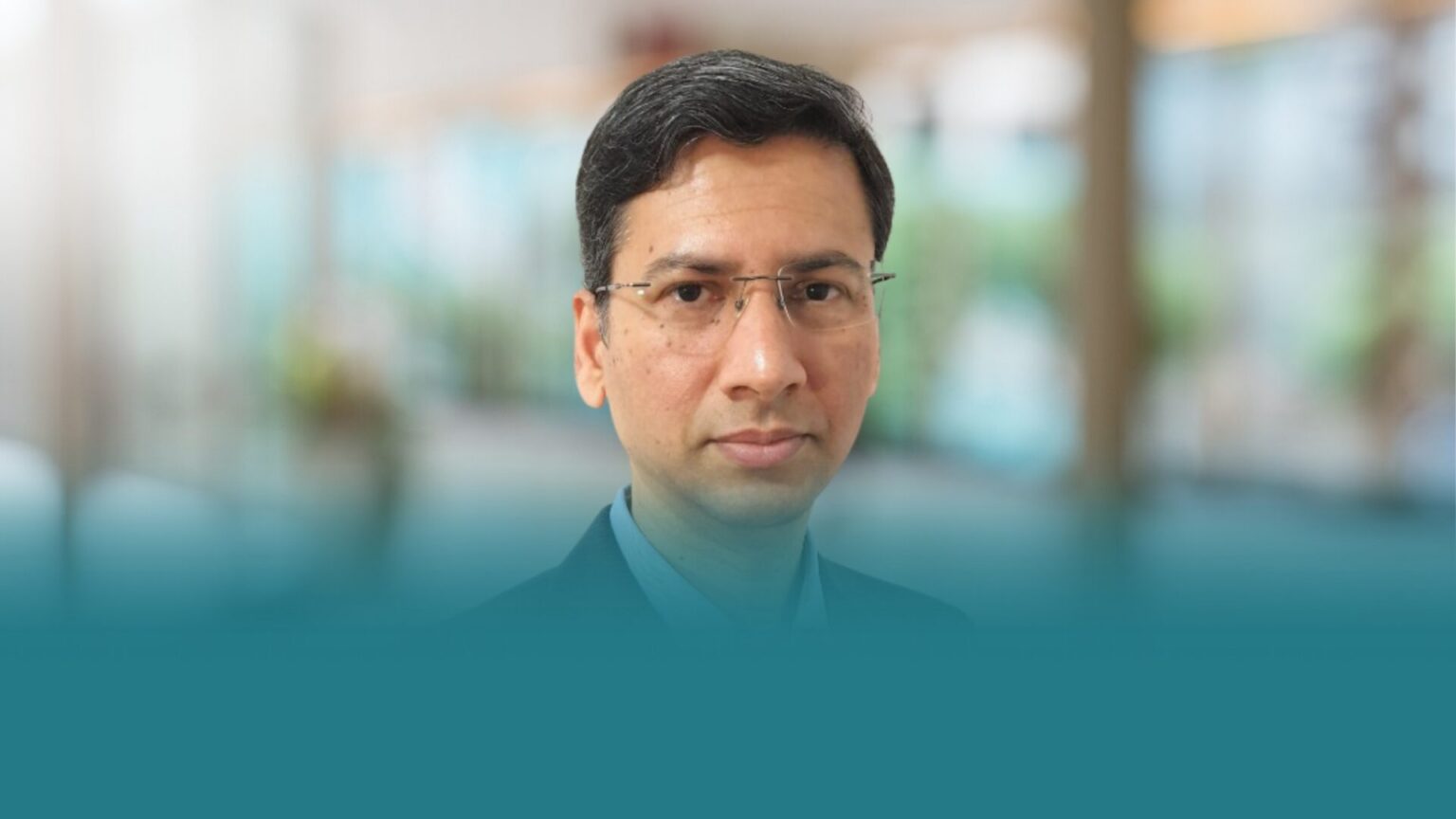
When we’re young, success often feels like a destination. It’s the next promotion, the next opportunity, the next milestone waiting somewhere in the distance. But over time, our understanding of success evolves. We begin to realise that growth isn’t defined by a single achievement but by the people we help, the lessons we learn, and the impact we create along the way.
For Vaibhav Tiwari, that shift has been shaped by decades of leadership, global transformation programs, and a career spent sitting at the intersection of business and technology. Along the way, he has learned that technology alone never solves problems, leadership is rarely about having all the answers, and the most successful teams are built on trust, honesty, and continuous improvement.
Finding His Way to SAP
Interestingly, Vaibhav’s path into ERP wasn’t planned from the beginning. He studied Chemical Engineering at one of India’s leading engineering institutions before entering the software industry as a developer. Like many graduates of his generation, technology offered exciting career opportunities, and he quickly secured a role through campus recruitment. Yet after spending time in software development, he realised something was missing.
“I realised that perhaps I’m not enjoying being a developer too much.”
Rather than continuing down a path that didn’t feel right, he stepped back and reassessed. He enrolled in an MBA specialising in Information Management, determined to find a career that combined technology with business. During that time, SAP regularly recruited from his university, and everything he heard about the organisation resonated with him. It offered exposure to technology, business processes, global industries and, importantly, the opportunity to work with people around the world.
Vaibhav didn’t leave the opportunity to chance. He deliberately worked towards becoming a strong SAP candidate, completing specialised coursework and even studying German for a year to strengthen his profile. The effort paid off. SAP recruited him into its consulting division, beginning a journey that would shape the rest of his career.
Learning That Technology Isn’t the Starting Point
After joining SAP, Vaibhav was sent through extensive training to learn the company’s products and consulting methodologies. He soon found himself working within SAP’s International Consulting Group, a specialised team responsible for helping customers adopt new products before they were widely available in the market.
The work was challenging and often unpredictable. These were solutions that few people understood, supporting business problems that had rarely been addressed before. Whether working with automotive manufacturers in the United States or supporting Nokia in Finland during its peak years, every project required a willingness to learn, adapt and solve unfamiliar challenges.
Yet the biggest lesson wasn’t technical.
“Technology is an enabler to solve a business problem. You should not implement technology just for the sake of technology.”
That principle became one of the foundations of his leadership philosophy. Too often, organisations become fascinated by the latest technology without fully understanding the problem they are trying to solve. For Vaibhav, successful transformation begins with clarity around business outcomes. Only then can technology play its role as an enabler.
“It’s about solving the right thing and doing it right.”
The Coffee Mug That Stayed With Him
Throughout his career, Vaibhav has worked on major transformation programs across industries and countries. While methodologies, technologies and organisations have changed over the years, one simple lesson has stayed with him.
During a project with BHP Billiton in Australia, every team member was given a coffee mug carrying a simple phrase:
“Plan the work and work the plan.”
What started as a slogan became a guiding principle. Vaibhav believes successful projects require careful planning, clear objectives and disciplined execution. The more uncertainty a project contains, the more important it becomes to establish clarity around goals, responsibilities and expectations from the very beginning.
Equally important is maintaining transparency with stakeholders. Over the years, he has learned that every person involved in a project defines success differently. A customer may have one vision of success, a project team another, and leadership yet another. The only way to align those perspectives is through honest conversation.
“If you are open and honest, they will also be open and honest with you, and they will share what does a win look like for them.”
Once people understand what success looks like for one another, finding a genuine win-win outcome becomes far more achievable.
When Leadership Stops Being About Answers
Like many technical professionals, Vaibhav’s early career was built on expertise. His value came from solving problems, providing guidance and delivering answers. However, as his responsibilities expanded and he began leading larger teams and programs, he encountered an important reality.
“I realised that I can’t be everywhere. I can’t solve all the problems.”
That realisation marked a turning point in how he approached leadership. During his time working with Rio Tinto, he recognised that success was no longer about personally solving every issue. Instead, it was about creating the structures, communication channels and decision-making frameworks that enabled others to succeed.
Leadership became less about directing and more about enabling. It meant ensuring information flowed freely throughout teams, encouraging people to raise issues early, and building trust so that concerns weren’t hidden until they became larger problems. Most importantly, it meant creating an environment where people believed their feedback mattered.
As Vaibhav points out, people only speak up when they believe something will be done with the information they share. Building that confidence takes consistency, follow-through and genuine care.
Building Teams Around Strengths
One of the themes that appears repeatedly throughout Vaibhav’s story is the importance of self-awareness. In his experience, trust doesn’t begin with processes or frameworks. It begins with honesty.
For leaders, that means openly acknowledging both strengths and weaknesses.
“Nobody is perfect.”
When leaders create that level of openness, team members become more comfortable doing the same. Rather than pretending to be experts in everything, people can focus on the areas where they add the most value. One person may excel at analytics, another at stakeholder engagement, another at communication or problem-solving. The goal isn’t to create individuals who are strong at everything. The goal is to build teams whose strengths complement one another.
“How do you achieve that? You achieve that by accepting what are your strengths and what are your weaknesses.”
For Vaibhav, high-performing teams are built when people understand what they bring to the table and trust others to contribute their own strengths.
Solving the Problem, Not the Person
When asked how he handles mistakes and failures within teams, Vaibhav returned to a principle that has become central to his leadership approach.
“Solve the problem and not the person.”
He believes that when discussions focus on blame, learning stops. People become defensive, information gets hidden, and the real causes of problems remain unresolved. By contrast, when teams focus on understanding the issue itself, individuals are more willing to share what happened, identify gaps and contribute to solutions.
“If you start the direction towards a person, then the problem is never solved.”
This doesn’t mean accountability disappears. Instead, accountability shifts towards understanding root causes, improving processes and ensuring mistakes aren’t repeated. In Vaibhav’s view, making mistakes is part of growth. Repeating the same mistakes after learning from them is where the real challenge begins.
Seeing the Bigger Picture
One piece of advice Vaibhav consistently offers younger professionals is to look beyond their immediate responsibilities.
Many people assume their leaders have all the answers. In reality, he believes leadership often involves managing competing priorities, constraints and expectations rather than possessing superior technical knowledge.
“Younger people often think that my boss knows everything. And that is completely untrue.”
What leaders often see more clearly is the broader context surrounding a project. They understand the organisational objectives, budget realities, stakeholder expectations and strategic priorities influencing decisions. Professionals who learn to understand that bigger picture early in their careers position themselves to make better decisions and create greater value.
“If you start to think about the value generated out of that particular technology or a problem, you will do a better job.”
For Vaibhav, empathy plays a critical role in that process. Understanding how customers, users and stakeholders experience a solution often leads to better outcomes than focusing solely on the technology itself.
Family, Food and Finding Balance
Outside work, Vaibhav’s greatest source of support comes from his family. Throughout a career that has taken him across continents and demanded long hours, his wife, children and loved ones have provided the stability that makes everything else possible.
“My wife has supported me tremendously in all my journey.”
Like many leaders, finding balance isn’t always easy. His current role often requires late-night meetings across multiple time zones, creating a demanding schedule. Yet when he needs to recharge, he gravitates towards simple activities that allow him to focus entirely on the present moment.
Sometimes that means fixing something around the house. Other times, it means cooking.
“I like cooking, so when I’m too stressed, I start to cook something and I create some dish.”
In a world filled with constant demands, those small moments of focus provide an opportunity to reset.
Success as a Continuous Journey
Perhaps the most powerful reflection from Vaibhav’s story is how his definition of success has evolved over time.
“When I was young, success was a destination. The more experienced I get, the more I see success as a journey.”
Today, success isn’t defined by a title, a project or a single achievement. It’s measured through continuous improvement, helping teams grow, delivering value to customers and creating environments where people can thrive. Progress doesn’t always come through dramatic breakthroughs. More often, it comes through small, consistent improvements repeated over time.
“It’s a regular journey of slow improvements, but continuous improvement is how I define success.”
That perspective extends beyond his own career. For Vaibhav, growth only becomes meaningful when the people around you are growing too.
Staying Curious in the Age of AI
Despite decades of experience, Vaibhav remains deeply committed to learning. His latest focus is artificial intelligence, an area he finds both exciting and transformative. Rather than relying solely on self-study, he recently enrolled in an online university program to formally deepen his understanding of AI.
“If at my life stage, I can go and join a university program to learn AI and force myself to do coding and give exam, then I think you have to do it.”
He believes the next generation of professionals will face a world that changes faster than any previous generation has experienced. The skills people learn today may not perfectly match the challenges they encounter tomorrow. As a result, adaptability and continuous learning will become increasingly important.
His advice is simple: never stop learning.
Technology will continue to evolve. Industries will continue to change. The professionals who thrive will be those willing to evolve alongside them.
A Human-Centred View of Transformation
After decades of leading transformations, Vaibhav still believes the biggest mistake organisations make is assuming technology alone will create change.
Successful transformation requires much more. It requires clear objectives, measurable outcomes, engaged people, effective processes and trusted data. Technology plays an important role, but only when those foundations are already in place.
“Just throwing a technology onto it will not solve the problem.”
For someone who has spent his career in ERP and digital transformation, it is a refreshingly human perspective. Because beneath every system, every project and every transformation are people trying to solve real problems and create better outcomes.
And perhaps that’s what defines Vaibhav’s story best. Not the technologies he has implemented or the programs he has led, but his belief that lasting success comes from helping people grow, work together and continuously improve along the journey.
Connect with Vaibhav on LinkedIn