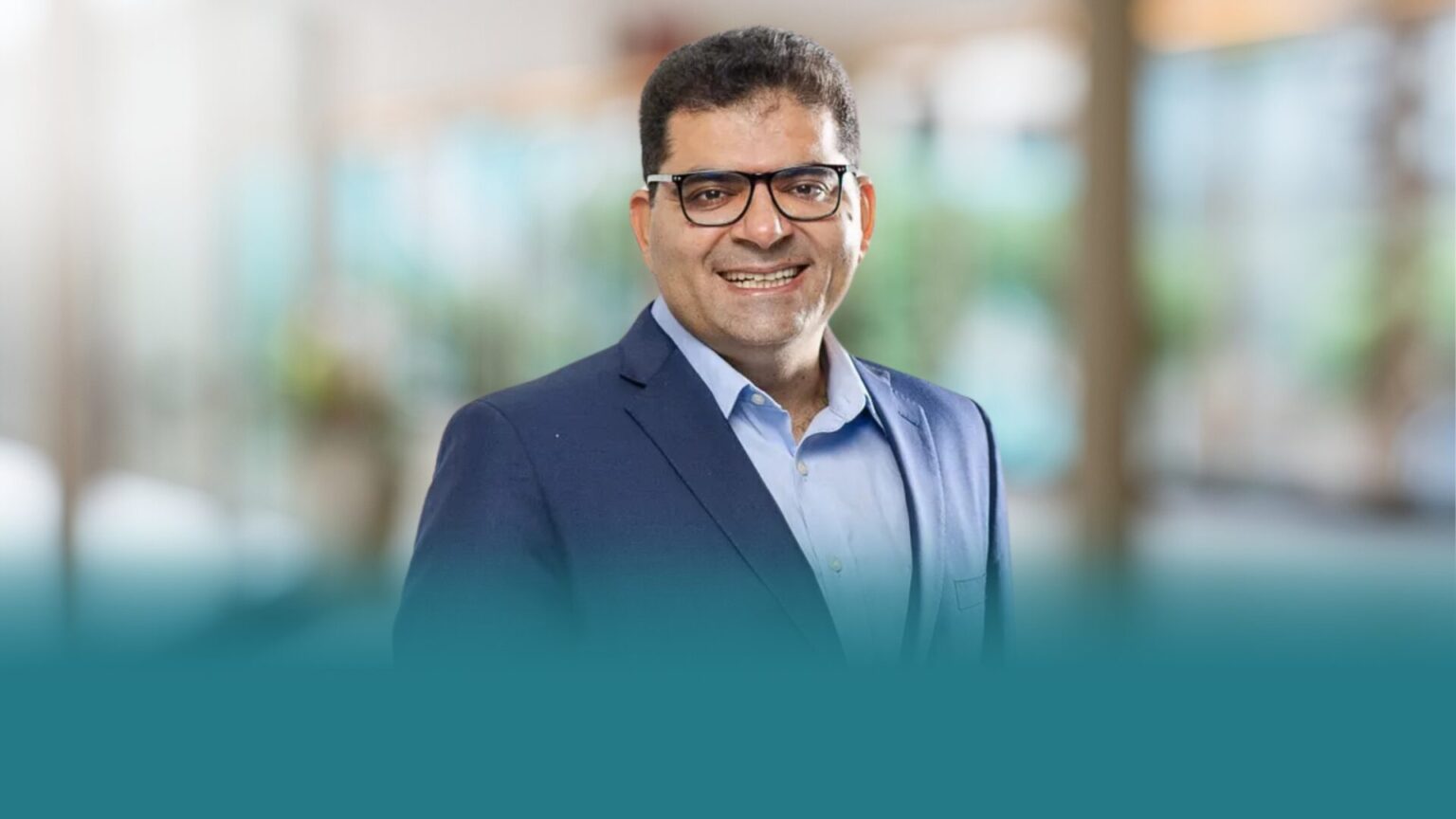
“Give the world the best you have and the best comes back to you… I live this and I reap the benefit out of it.”
For Sahil Naqvi, this isn’t just a mantra — it’s the philosophy that has carried him through personal challenges, entrepreneurial struggles, and the shifting landscapes of technology and business.
From Curiosity to Calling
Like many in the technology world, Sahil’s fascination began early. He remembers vividly the day a computer defeated the world chess champion — a cultural moment that left a mark on him. But unlike most, his takeaway wasn’t about machines being superior.
“At that stage, probably me and my friends thought this is a time when technology has graduated. But over the years what we realised is this was a time when the human race graduated.”
To him, it wasn’t about computers replacing people. It was about what people could become when they worked with technology. That distinction would go on to shape the rest of his career.
A Philosophy of Technology as a Tool
From the very start of his professional journey, Sahil approached technology differently. He never saw it as the star of the show, but as an enabler.
“My mindset from the start of my career has been around making technology as a tool, as a method, an accelerator — rather than trying to put a solution around the technology.”
This perspective gave him clarity when others got lost in the hype.
For Sahil, the real question was never “What can this technology do?” but rather “What human problem does this solve?” It’s a subtle but powerful shift — one that allowed him to bridge gaps between business leaders, technology experts, and end-users. In his hands, complex systems became less about code and more about connection.
The Human Angle
Sahil often asks a simple but profound question: “No humans and only technology — can it survive? I mean, it cannot, right?” He believes that progress isn’t about removing people from the equation, but about amplifying their strengths. That’s why he champions human-centred thinking — designing processes, tools, and workplaces that prioritise people first.
“Bringing all of those human angles, bringing all of those human-centred thinking is the new future that we will all be living in and technology for all of us would be the means to reach there.”
It’s not just philosophy for him — it’s advocacy. Sahil is passionate about inclusion, particularly around neurodiversity. He sees inclusiveness not as a checkbox, but as an essential ingredient for innovation. Different perspectives, he argues, don’t slow things down — they make solutions richer, stronger, and more sustainable.
Resilience in the Startup Trenches
Sahil’s beliefs are not just theoretical. They are tested daily in the trenches of entrepreneurship. As the founder of a young start-up, he has faced pressures that many would find overwhelming. “Struggling would be an understatement,” he admits with a wry smile. But he doesn’t flinch from the challenge. Instead, he reframes it.
“As long as I enjoy this pressure, I am okay. I always tend to look back on my own previous version and as long as I experience the evolution and personal growth, I feel assured I am on the right path.”
For him, growth isn’t only about the company’s success — it’s about his own transformation. Every setback becomes a lesson. Every obstacle, a chance to evolve.
The Purposeful Builder
At his core, Sahil is a builder. Not just of systems, but of bridges — between people and technology, between purpose and execution, between today’s struggles and tomorrow’s possibilities. He knows the path is not easy. But he doesn’t seek the easy path. Instead, he seeks the meaningful one.
“Give the world the best you have and the best comes back to you.”
For Sahil, this isn’t just a belief — it’s a lived truth, one that guides him as a leader, a founder, and a human being navigating a technological world. And in that pursuit, he reminds us that the future will not be defined by machines alone, but by the humanity we bring into every system we design, every problem we solve, and every connection we make.
Connect with Sahil on LinkedIn